


Table of Contents
- What Defines Ethical Fashion and Why It Matters
- Ethical Fashion Certifications Explained
-
Top Ethical Clothing Brands for Women: A Comparison
- F'cks Given Full Heart Co.: Sustainably Made-to-Order Self-Expression
- Pact: Affordable Organic Basics with Transparent Supply Chains
- Everlane: Radical Transparency in Minimalist Design
- Reformation: Trend-Forward Sustainability with Carbon Tracking
- Patagonia: Durability and Repair as Core Values
- Boody: Bamboo Basics for Everyday Comfort
- NAADAM: Ethically Sourced Luxury Cashmere
- Eileen Fisher: Circular Fashion Through Take-Back Programs
- Amour Vert: Small-Batch Production Made in America
- Stella McCartney: Luxury Vegan and Cruelty-Free Fashion
- How to Build a Capsule Wardrobe with Ethical Pieces
- Affordable Sustainable Clothing Brands That Don't Compromise
- Cost-Per-Wear: Why Ethical Fashion Is Better Value Long-Term
- Spotting Greenwashing: How to Verify Genuine Ethical Claims
- Size Inclusivity in Ethical Fashion Brands
- Frequently Asked Questions
Last Updated: September 3, 2026
What Defines Ethical Fashion and Why It Matters
Ethical fashion prioritizes fair labor practices, environmental responsibility, and transparent supply chains. At F'cks Given Full Heart Co., we believe that the clothes you wear should reflect your values, not compromise them.
The fashion industry is one of the world's largest polluters, consuming vast water and generating chemical waste (unep.org). Garment workers often face poverty wages, unsafe conditions, and exploitation. Ethical fashion challenges these systems by demanding better.
Genuine ethical fashion combines fair wages, sustainable sourcing, minimal waste, and supply chain transparency. Greenwashing, appearing sustainable while maintaining harmful practices, is rampant, making it essential to spot the difference.
The best ethical clothing brands prove their values through verifiable certifications, detailed supply chain reporting, and commitment to circular economy principles. This guide breaks down what to look for and which brands deliver.
Ethical Fashion Certifications Explained
Fair Trade Certified ensures workers earn living wages and work in safe conditions, verifying strict labor standards in sewing, dyeing, and finishing.
GOTS (Global Organic Textile Standard) verifies organic fibers grown without synthetic pesticides and processed with approved chemicals only, addressing conventional cotton's heavy pesticide use.
B Corp Certification measures overall social and environmental impact across labor, environment, and community engagement, broader than single-issue certifications.
Carbon Neutral or Climate Neutral Certifications verify measured and offset emissions through renewable energy or regenerative agriculture investments.
The strongest brands combine labor certifications with environmental ones; one seal alone doesn't guarantee comprehensive ethics.
Top Ethical Clothing Brands for Women: A Comparison
F'cks Given Full Heart Co.: Sustainably Made-to-Order Self-Expression
Our top pick is F'cks Given Full Heart Co. because it embodies everything ethical fashion should be: intentional, sustainable, and unapologetic about values.
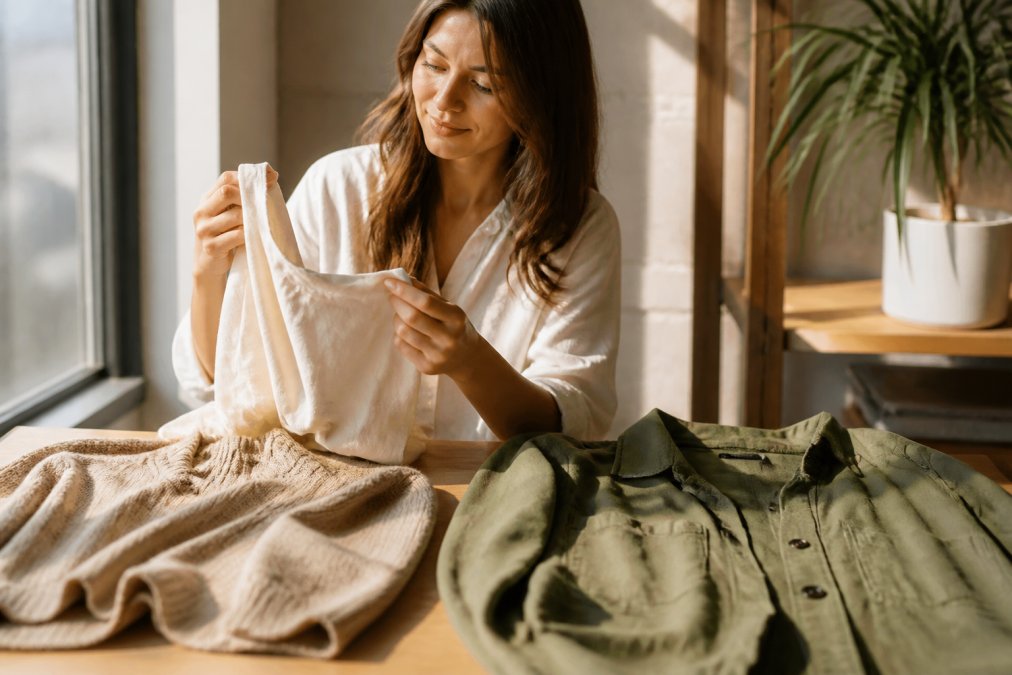
F'cks Given Full Heart Co. operates on a made-to-order model, creating every piece only when ordered, eliminating overproduction and refusing fast fashion cycles.
Pieces serve as tools for self-expression. The unfiltered brand philosophy won't soften its message to appeal to everyone, authenticity matters.
Made-to-order requires waiting weeks, not days, a trade-off for intentional production.
Pros:
- Eliminates waste through made-to-order production
- Consciously designed with intention and purpose
- Refuses fast fashion and mass production
- Integrated ecosystem of apparel, journals, and accessories
Cons:
- Made-to-order timing requires planning ahead
- Premium pricing reflects sustainable production and design quality
Pact: Affordable Organic Basics with Transparent Supply Chains
Pact proves ethical fashion doesn't require luxury pricing. GOTS-certified organic cotton essentials from Fair Trade Certified factories are traceable to specific factories. Pact specializes in basics: t-shirts, underwear, and loungewear.
Trade-off: limited to timeless basics, no trendy or seasonal pieces.
Pros:
- Highly accessible pricing for certified organic cotton
- Transparent supply chain with factory-level traceability
- Fair Trade Certified production
- Carbon-offset shipping available
Cons:
- Limited to casual and basic styles
- No trend-forward pieces
Everlane: Radical Transparency in Minimalist Design
Everlane publishes detailed cost breakdowns for every product and transparency reports on factory conditions and labor standards. Minimalist designs using recycled and organic materials build cohesive wardrobes.
Limitations: some pieces require dry cleaning, adding cost and environmental impact. Pricing is reasonable but not the cheapest option.
Pros:
- High level of supply chain transparency
- Detailed cost breakdowns for every product
- Versatile, long-lasting minimalist designs
- Use of recycled and organic materials
Cons:
- Some items are dry-clean only
- Not the most affordable option
Reformation: Trend-Forward Sustainability with Carbon Tracking
Reformation combines sustainability with trend-conscious design using deadstock fabrics. The RefScale tool tracks environmental impact, comparing Reformation pieces to conventional alternatives while supporting carbon-neutral operations.
Pros:
- Strong focus on circularity and low-impact materials
- Trend-conscious designs that people want to wear
- RefScale tool provides transparent environmental impact data
- Carbon-neutral certified operations
Cons:
- Higher price point compared to basics brands
- Trend-focused pieces may date faster than timeless designs
Patagonia: Durability and Repair as Core Values
Patagonia leads in environmental activism and labor practices. The Worn Wear program repairs gear and resells used items, keeping clothing in use longer, backed by a lifetime guarantee.
Patagonia uses Fair Trade Certified sewing, recycled polyester, and organic cotton, investing profits in environmental activism and conservation.
Limitation: outdoor and sporty aesthetic; excels at performance wear, not everyday fashion.
Pros:
- Exceptional product durability and warranty
- Worn Wear repair and resale program extends garment life
- Industry-leading environmental activism
- Fair Trade Certified production
Cons:
- Sporty aesthetic may not suit all wardrobes
- Focused on outdoor performance rather than everyday fashion
Boody: Bamboo Basics for Everyday Comfort
Boody makes sustainable basics from organically grown bamboo viscose processed in a closed-loop system that recycles solvents. Affordable pricing makes hypoallergenic, moisture-wicking basics accessible.
Trade-off: limited to basics; requires delicate care.
Pros:
- Extremely soft and breathable materials
- Affordable entry-level pricing for sustainable basics
- Closed-loop manufacturing process
- Hypoallergenic and moisture-wicking properties
Cons:
- Limited range of styles beyond basics
- Requires delicate care and washing
NAADAM: Ethically Sourced Luxury Cashmere
NAADAM sources cashmere directly from Mongolian herders, ensuring fair compensation and sustainable grazing. Direct-to-farm sourcing produces softer, more durable cashmere with carbon-neutral shipping and transparent pricing.
Pros:
- Superior material quality and durability
- Direct relationship with cashmere herders ensures fair wages
- Carbon-neutral shipping
- Transparent pricing model
Cons:
- Requires delicate care and maintenance
- Premium pricing reflects luxury positioning
Eileen Fisher: Circular Fashion Through Take-Back Programs
Eileen Fisher's Renew take-back program returns worn pieces for repair, resale, or recycling. Timeless designs using organic linen and recycled fibers extend garment life and reduce waste.
Pros:
- Strong commitment to circularity through Renew program
- High-quality, durable construction
- Timeless, sophisticated designs for longevity
- Use of organic and recycled materials
Cons:
- Premium price point
- Sophisticated aesthetic may not suit all preferences
Amour Vert: Small-Batch Production Made in America
Amour Vert manufactures small batches in the United States using non-toxic dyes and sustainable fibers, ensuring Fair Trade wages and reducing waste.
Limitation: limited inventory; popular items sell out quickly.
Pros:
- Reduces waste through small-batch manufacturing
- High-quality, non-toxic materials
- Domestic manufacturing supports local labor standards
- Feminine, classic designs
Cons:
- Limited inventory availability due to small batches
- Items sell out quickly during production runs
Stella McCartney: Luxury Vegan and Cruelty-Free Fashion
Stella McCartney leads in luxury sustainable fashion, 100% vegan and cruelty-free. Runway-ready pieces pioneer vegan leather and sustainable fabrics with strict environmental reporting and climate-positive commitment.
Premium positioning for those prioritizing luxury with ethics.
Pros:
- Industry leader in sustainable luxury innovation
- 100% vegan and cruelty-free materials
- Strict adherence to animal welfare
- High-fashion, runway-ready designs
Cons:
- Very high price point
- Luxury positioning may not align with all budgets
How to Build a Capsule Wardrobe with Ethical Pieces
A capsule wardrobe combines essential, versatile pieces: neutral basics in organic cotton, layering pieces in timeless cuts, one or two statement pieces, and quality shoes in vegan leather or recycled materials. Key principle: cost per wear. An ethical piece worn 100 times over five years costs less per wear than a fast fashion item worn 10 times.
| Capsule Category | Ethical Considerations | Recommended Brands |
|---|---|---|
| Basics (t-shirts, underwear) | Organic cotton, Fair Trade certified | Pact, Boody, F'cks Given Full Heart Co. |
| Layering (cardigans, blazers) | Durable materials, timeless design | Everlane, Eileen Fisher, Amour Vert |
| Statement Pieces | Reflects personal values and style | Reformation, F'cks Given Full Heart Co., Stella McCartney |
| Knitwear | Ethically sourced fibers | NAADAM, Patagonia, Eileen Fisher |
| Footwear | Vegan or recycled materials | Patagonia, Stella McCartney |
Affordable Sustainable Clothing Brands That Don't Compromise
Ethical fashion doesn't require luxury pricing. Pact, Boody, and Everlane offer affordable options with transparent pricing. Fast fashion's low prices exist because workers, the environment, or both subsidize them.
Cost-Per-Wear: Why Ethical Fashion Is Better Value Long-Term
Cost-per-wear analysis reveals ethical fashion's true value. A $100 ethical t-shirt worn 200 times costs $0.50 per wear; a $15 fast fashion t-shirt worn 10 times costs $1.50 per wear. Ethical brands design for longevity; ethical fashion costs more upfront but less over time.
Spotting Greenwashing: How to Verify Genuine Ethical Claims
Greenwashing is rampant in fashion. Many brands use ethical language without verifiable backing. Learning to spot the difference protects your values and wallet.
Real ethical claims come with certifications like Fair Trade, GOTS, or B Corp, which require independent auditing. Brands claiming ethics without certifications are making unverified claims.
Check supply chain transparency. Genuine ethical brands name factories, discuss working conditions, and share environmental impact data. Vague production details are a red flag.
Beware of single-issue claims. True ethics address multiple dimensions: environmental impact, labor practices, waste reduction, and transparency.
Look at what the brand invests in: environmental projects, worker education, or sustainable materials research. Genuine commitment goes beyond marketing language.
According to Federal Trade Commission guidance on environmental marketing claims, companies must substantiate environmental claims with reliable evidence. Vague terms like "eco-friendly" or "sustainable" without specific backing may violate consumer protection standards.
Ask: could any brand make this claim? "We care about the environment" is greenwashing. "We use GOTS-certified organic cotton and Fair Trade Certified production" is verifiable.
The strongest ethical brands acknowledge their limitations and discuss ongoing improvements, proving more trustworthy than those claiming perfection.
Size Inclusivity in Ethical Fashion Brands
Ethical fashion has a size inclusivity problem. F'cks Given Full Heart Co. addresses this through made-to-order production, accommodating wider size ranges without waste. True ethical fashion serves all bodies.
| Brand | Size Range | Extended Sizes Available | Made-to-Order Option |
|---|---|---|---|
| F'cks Given Full Heart Co. | Custom sizing | Yes | Yes |
| Pact | XS-XXL | Limited | No |
| Everlane | XS-XXL | Some items | No |
| Reformation | XS-XXL | Limited | No |
| Patagonia | XS-XXL | Some items | No |
| Boody | XS-XL | Limited | No |
| NAADAM | XS-L | Limited | No |
| Eileen Fisher | XS-XL | Some items | No |
| Amour Vert | XS-XXL | Limited | No |
| Stella McCartney | XS-XL | Limited | No |
Building an ethical wardrobe is an act of alignment. Every purchase is a vote for the kind of fashion industry you want to exist. The best ethical clothing brands for women aren't just about looking good, they're about feeling good about what you're wearing and what it represents.
The brands covered here prove that ethical fashion is accessible, stylish, and valuable. Whether you're starting with affordable basics from Pact or investing in a luxury piece from Stella McCartney, you're choosing intention over impulse. You're choosing transparency over greenwashing. You're choosing to wear your values.
At F'cks Given Full Heart Co., we believe that fashion should support fearless self-expression without compromising ethics. Our made-to-order model eliminates waste while ensuring every piece reflects your authentic self. Learn more about conscious fashion design principles to deepen your understanding of what truly ethical production means.
Ready to build a wardrobe that feels as good as it looks? Start with one piece. Choose a brand that aligns with your values. Wear it with intention. That's how ethical fashion becomes a practice, not just a purchase.
Frequently Asked Questions
What actually makes a clothing brand ethical?
An ethical clothing brand prioritizes fair labor practices, transparent supply chains, and environmental responsibility. This means paying garment workers living wages, using sustainable materials like organic cotton or recycled fabrics, and being honest about manufacturing conditions. Look for certifications like Fair Trade Certified, GOTS (Global Organic Textile Standard), or B Corp status. Ethical brands also minimize waste, avoid greenwashing, and often provide traceability so you can track where your clothes come from and how they're made.
How do ethical fashion certifications explained help me choose brands?
Certifications act as third-party verification that a brand meets specific environmental and labor standards. Fair Trade Certified ensures workers earn living wages; GOTS certifies organic fiber production and processing; B Corp status means the company meets rigorous social and environmental performance standards. These certifications reduce greenwashing risk by requiring independent audits and ongoing compliance. When shopping for ethical clothing brands, prioritizing certified options gives you concrete proof of claims rather than relying on marketing language alone.
Why should I spend more on ethical clothing when I can buy cheaper options?
Ethical clothing typically costs more upfront because it reflects true production costs: fair wages, quality materials, and responsible manufacturing. However, cost-per-wear analysis reveals the real value. An ethical piece that lasts five years costs less per wearing than a fast-fashion item worn a few times. Ethical brands also use durable fabrics and timeless designs, meaning less frequent replacement. You're investing in longevity, quality, and knowing your purchase supports fair labor and environmental protection, not just paying for a brand name.
Can I build an ethical wardrobe on a budget?
Yes. Affordable sustainable clothing brands like Pact start at $20 for basics, and Boody offers bamboo essentials under $20. Building a capsule wardrobe with neutral, versatile pieces from budget-friendly ethical brands stretches your money further than buying trendy items. Mix investment pieces with affordable basics: splurge on a quality coat or jeans, then fill your wardrobe with affordable organic cotton basics. Shopping secondhand from ethical brands' resale programs (like Patagonia's Worn Wear) also reduces costs while extending garment life.
How can I tell if a brand is greenwashing versus genuinely ethical?
Red flags for greenwashing include vague claims like 'eco-friendly' without certifications, lack of supply chain transparency, and no concrete environmental goals. Genuine ethical brands publish detailed information about factories, materials sourced, and labor practices. They disclose certifications (Fair Trade, GOTS, B Corp), share annual sustainability reports, and explain specific environmental impact reductions. Ask yourself: Can you trace where this garment was made? Does the brand name specific factories? Are certifications from independent organizations? Brands with nothing to hide provide these details freely.
This article was written using GrandRanker

