


Table of Contents
- What Makes Statement Apparel Sustainable?
- Made-to-Order vs. Fast Fashion: A Price Comparison
- The Benefits of Made-to-Order Clothing
- Eco-Friendly Fashion Certifications: What to Look For
- How to Build a Sustainable Capsule Wardrobe
- Greenwashing Detection Checklist for Online Shoppers
- Cost-Per-Wear: Why Quality Statement Pieces Cost Less
- Frequently Asked Questions
Last Updated: September 20, 2026
What Makes Statement Apparel Sustainable?
Sustainable statement apparel carries a message while being produced in a way that limits environmental harm and respects the people who make it. The defining test is not the slogan on the chest, but how the garment was made, what it is made from, and how long it will last.
Most advice on how to buy sustainable statement apparel online misses the point: the real difference shows up in production model, material choice, and whether the brand will name where its fabric comes from. At F'cks Given Full Heart Co., every piece is made to order, so nothing is produced until someone wants it, removing apparel's biggest source of waste: unsold inventory.
A statement piece earns the label sustainable when it meets four conditions:
- Produced only after an order is placed, not in speculative bulk
- Made from traceable fibers
- Built to survive repeated washing rather than one season
- Backed by a brand willing to name its suppliers and certifications
Miss any one of those and you have a slogan, not a sustainable garment.
Made-to-Order vs. Fast Fashion: A Price Comparison
Made-to-order clothing costs more upfront than fast fashion, but the gap narrows once you account for how long each piece stays in rotation. A mass-produced graphic tee may sell for a fraction of the price and fall apart after a few washes; a made-to-order equivalent costs more at checkout and lasts years.
| Factor | Fast Fashion | Made-to-Order |
|---|---|---|
| Upfront cost | Lowest | Higher |
| Production trigger | Bulk forecast | Your order only |
| Overproduction waste | High | Near zero |
| Typical lifespan | One season | Multiple years |
| Fit options | Fixed sizing | Often customizable |
| Transparency | Rarely disclosed | Brand-dependent |
| Lead time | Ships in days | Weeks |
| Resale value | Near zero | Holds better |
The honest drawback: made-to-order means waiting. Production and delivery take time, and if you need something for an event next week, that timeline will not work. Plan ahead or accept the wait as part of the tradeoff.
The cost-per-wear math that flips the comparison
The sticker price is the wrong number to compare. Divide the price by the number of times you actually wear the garment and the ranking reverses: a made-to-order hoodie worn twice a week for two years works out to a few cents per wear, while a bargain hoodie that pills after three months costs far more per wear. The cheap item is the expensive one.
Run this calculation before you add to cart:
- Estimate the realistic number of wears per year (be honest, most people overestimate).
- Multiply by the number of years the garment will plausibly survive.
- Divide the price by that total.
A piece that costs more but survives three times as long wins every time, the whole argument for buying fewer, better statement pieces.
What happens to each garment at end of life
Most comparisons stop at the checkout, but the real difference shows up years later. Fast fashion's blended fibers and plastic-based trims are hard to separate, so much of it lands in landfill rather than a recycling stream. Made-to-order pieces from traceable materials are far easier to repair, resell, or recycle.
A common pattern is that shoppers who buy made-to-order keep garments longer, repair them instead of replacing them, and pass them on rather than tossing them. That extended life is where the environmental case actually lands.
The comparison is not really about price, but what you get over the garment's full life, and what happens to it afterward.
The Benefits of Made-to-Order Clothing
The benefits of made-to-order clothing start with waste reduction: when a garment is produced only after purchase, a brand never has to discount, landfill, or incinerate unsold stock. That circular-economy argument is why made-to-order has moved from niche to mainstream.
Eco-Friendly Fashion Certifications: What to Look For
Eco-friendly fashion certifications are third-party verifications that a garment or its supply chain meets defined environmental or labor standards. They exist because self-declared "sustainable" claims are largely unregulated and shoppers have no way to verify them otherwise.
The certifications worth knowing:
- GOTS (Global Organic Textile Standard): verifies organic fiber content and processing standards
- Fair Trade Certified: confirms labor rights and fair wages in the supply chain
- OEKO-TEX Standard 100: tests finished textiles for harmful substances
- GRS (Global Recycled Standard): verifies recycled content claims, including recycled polyester and rPET
- B Corp: confirms a company meets social and environmental performance benchmarks
Look for the certification, not the adjective.
How to Build a Sustainable Capsule Wardrobe
A sustainable capsule wardrobe is a small, intentional collection of versatile pieces that mix and match across most of your life, so you buy less and wear more. The goal is not minimalism for its own sake, but making every purchase count.
Here is a working method:
- Audit what you own. Pull everything out and note what you actually wore in the last month.
- Identify the gaps. Find the pieces you reach for that you do not own yet.
- Set a target count. Most capsules land between 25 and 40 items including shoes and outerwear.
- Choose a neutral base. Solids and natural fibers pair with more of what you already have.
- Add one statement piece. This is where sustainable statement apparel earns its place. A message tee or hoodie becomes the item that carries your point of view.
- Replace, do not add. When something wears out, replace it with a better-made version.
Styling statement pieces for professional settings
Most sustainable-fashion content assumes you live in loungewear, leaving a gap for anyone who needs to look put-together at work. A statement piece does not have to be loud to work professionally, it has to be intentional.
- Layer under structure. A graphic tee or tank worn under a blazer or cardigan reads as considered rather than casual.
- Keep the message subtle. A small chest print or tonal graphic lands better than a full-back slogan in a conservative workplace.
- Anchor with tailored basics. Pair the statement piece with a clean trouser or midi skirt so the message is the accent, not the whole outfit.
- Stick to a tight palette. Two or three neutral tones plus one accent keeps the look cohesive across the week.
- Choose fabrics that hold a press. Organic cotton and structured knits photograph and drape better than thin, slubby blends.
Plan for the end of the garment's life
A capsule is not finished when you buy the pieces, but when you decide what happens to them. Build an exit plan from day one:
- Repair first. A loose seam or a small hole is a fix, not a replacement. Keep a basic sewing kit and use it.
- Resell or swap. Statement pieces with a clear message often hold resale interest better than plain basics.
- Recycle by fiber. Single-fiber garments, 100% organic cotton, 100% recycled polyester, are far easier to route into textile recycling than blends.
- Compost natural fibers where accepted. Untreated cotton and other natural fibers can break down in industrial composting, though most curbside programs do not accept textiles, so check local options first.
Greenwashing Detection Checklist for Online Shoppers
Run this checklist on any brand before you buy:
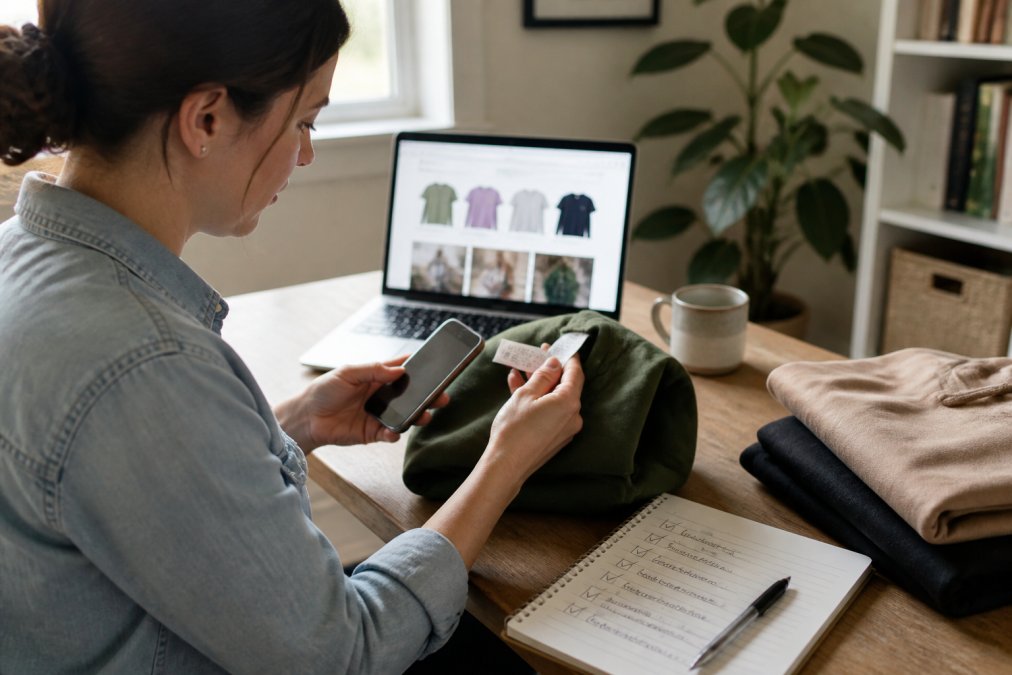
- Does the brand name specific certifications, or only use words like "conscious" and "eco"?
- Can you find the actual fiber content, not just "sustainable materials"?
- Is there any information about where the garment is made?
- Does the brand explain its production model, or hide it behind vague language?
- Are there specific claims with numbers, or only feelings?
- Does the return policy exist and is it clear?
- Is the price consistent with the materials and labor described?
If a brand passes most of these, it is likely doing real work. If it fails more than two, keep looking.
Cost-Per-Wear: Why Quality Statement Pieces Cost Less
Cost-per-wear is the price of a garment divided by the number of times you actually wear it, the single most useful number in a sustainable wardrobe, because it exposes the lie that fast fashion is cheaper.
Frequently Asked Questions
Where can I buy sustainable statement apparel online without risking greenwashing?
Look for brands that share supply chain transparency and make items to order. F'cks Given Full Heart Co. lists fabric contents for each piece, and its made-to-order model reduces textile waste.
How long does made-to-order clothing take to arrive, and is it worth the wait?
Made-to-order production usually adds one to three weeks before shipping. The benefits of made-to-order clothing include less textile waste, no unsold inventory, and pieces produced only after you order. F'cks Given Full Heart Co. calculates shipping at checkout and notes items may arrive in separate packages. If you need an item for a specific event, order early.
What is the 3-3-3 rule for building a capsule wardrobe?
The 3-3-3 rule suggests choosing three tops, three bottoms, and three pairs of shoes per season, then mixing them into at least nine outfits. It works because every piece must pair with the others. When you buy sustainable statement apparel online, apply the same test: if a piece only works with one outfit, it probably will not earn its place in your capsule.
How can I verify if an online clothing brand is truly sustainable?
Check for third-party eco-friendly fashion certifications. Read the brand's supply chain transparency page to see if it names factories and fiber sources. Look at the fabric content: traceable materials are preferred, while vague terms like 'eco blend' are not. If a brand cannot answer where its fabric comes from, treat the claim as marketing.

