


Table of Contents
- Why a Heartfelt Letter for a Friend Still Lands Harder Than a Text
- What You'll Need Before You Write a Heartfelt Letter
- How to Start a Letter to a Friend: Openers That Don't Sound Stiff
- A Step-by-Step Framework for Writing a Heartfelt Letter
- Letter to a Friend Examples: Prompts for Different Friendships
- Letter to a Friend Template You Can Adapt in 20 Minutes
- How to End a Letter to a Friend Without Sounding Cheesy
- Handwritten, Mailed, or Digital: Choosing Your Delivery
- Frequently Asked Questions
Last Updated: October 9, 2026
Why a Heartfelt Letter for a Friend Still Lands Harder Than a Text
A heartfelt letter for a friend is a personal, handwritten or typed message that names specific memories, feelings, and appreciation for the relationship, written in your own voice rather than a polished or formal style.
At F'cks Given Full Heart Co., we build our whole brand around heart-first expression. So we think a lot about what makes words land. A text disappears in a scroll.
Here's the thing most people get wrong: they think a heartfelt letter has to be poetic or profound. It doesn't. It has to be true.
Below, we'll show you exactly how to write a heartfelt letter for a friend, step by step, with prompts, a template, and openers that don't sound stiff.
The U.S. Postal Service's mail volume data shows people still keep and treasure physical mail, which tells you something: paper lasts. Screenshots don't.
What You'll Need Before You Write a Heartfelt Letter
Most guides tell you to grab a pen and paper. That's the easy part.
A clear reason. Not a vague "I appreciate you", a specific occasion or impulse.
One specific memory. Not a summary of your friendship. One moment. The night they drove across town at 2 a.m.
A quiet twenty minutes. Not an hour. Not a whole afternoon.
A pen you actually like. This sounds trivial, but cheap ballpoints make writing feel like a chore.
Paper that lets you think messy. Lined pages keep your thoughts from wandering off the margin.
Your phone on silent. Notifications break the train of thought that heartfelt writing depends on. Twenty minutes of silence is the single biggest upgrade most people can make.
If you want something that feels good to hold while you draft, our Channel Here Faux Leather Journal has 80 lined cream pages, a ribbon bookmark, and an inside pocket for the loose notes you'll scribble first.

A common mistake is drafting on your phone. You'll edit instead of write.
How to Start a Letter to a Friend: Openers That Don't Sound Stiff
The best way to start a letter to a friend is to write the way you talk to them. Greet them by name, then say why you're writing in the first sentence or two.
Forget "Dear [Name], I hope this letter finds you well." That's a form letter, not a friendship.
Try openers like these:
- "Hey [Name], I've been thinking about you all week, so here I am."
- "[Name], I'm writing this because I owe you a real thank you."
- "So this is a letter. Weird, right? But you deserve more than a text."
- "I was doing dishes and thought about that night in [place], and I couldn't stop smiling."
Notice what these have in common: they sound like you. A greeting should feel like walking into their kitchen, not mailing a form.
One more tip from experience: start with the reason, not the weather. People skim small talk. They read honesty.
A Step-by-Step Framework for Writing a Heartfelt Letter
Here's a simple framework for writing a heartfelt letter: name your reason, pull one specific memory, say what you admire, then close with warmth. Each step takes a few minutes.
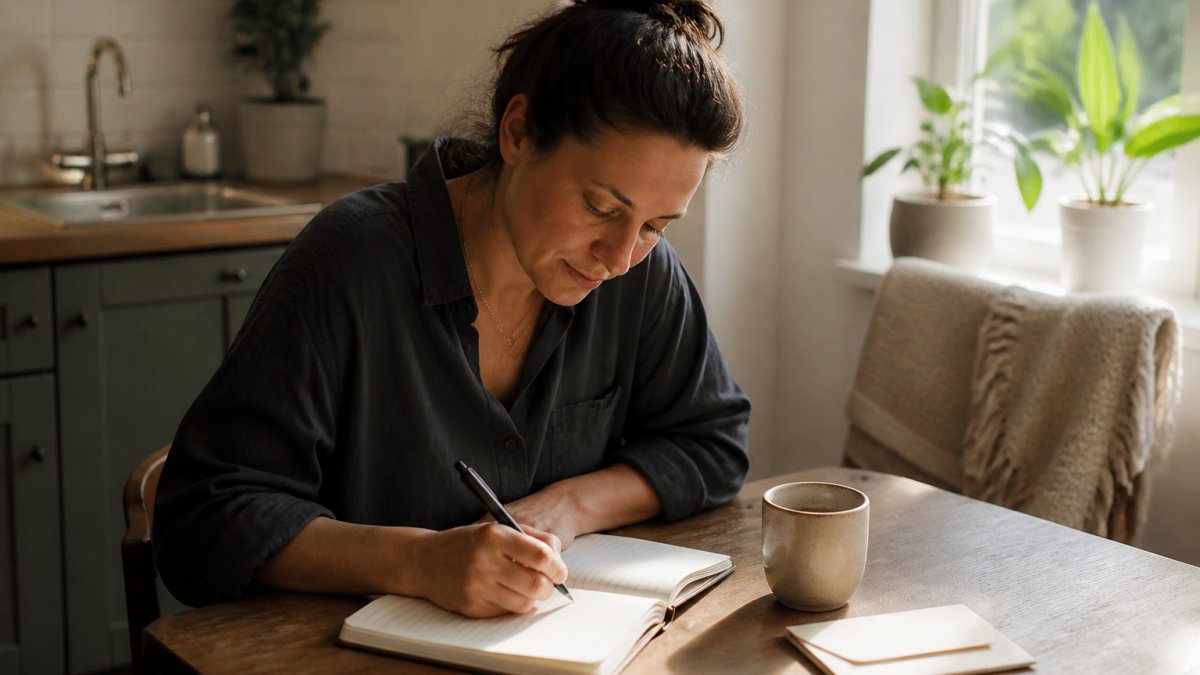
You don't need to be a writer to do this. You need honesty and about twenty minutes.
Step 1: Name Why You're Writing
Open with your purpose. Say it plainly.
- "I'm writing because you showed up for me when I was at my lowest."
- "I'm writing because you're moving and I don't want to say goodbye in a group chat."
- "I'm writing because I realized I've never actually told you what you mean to me."
Don't bury the reason. Your friend should know by sentence three why this letter exists.
Step 2: Pull One Specific Memory
Specificity is what makes a letter feel real. Pick one moment, not a summary of your whole friendship.
- The road trip where you got lost for four hours.
- The night they drove across town at 2 a.m.
- The inside joke that still makes you laugh in line at the grocery store.
Describe it in two or three sentences. Include a small detail: the song playing, the terrible diner food, the exact thing they said. Details are proof you remember.
Step 3: Say What You Admire Out Loud
This is the part people skip, and it's the part that matters most. Tell them what you see in them.
- "You're the bravest person I know, and you don't even see it."
- "You make people feel safe without trying."
- "You've taught me more about kindness than anyone I've met."
Say it directly. No hedging, no jokes to soften it. A heartfelt letter earns its name here.
Letter to a Friend Examples: Prompts for Different Friendships
Different friendships need different letters. A letter to your oldest friend looks nothing like one to a friend going through a hard time.
Channel Here Faux Leather Journal →
Use these prompts to get unstuck:
| Friendship type | What to lead with | Prompt to try |
|---|---|---|
| Childhood friend | Shared history | "Remember when we..." |
| Friend in crisis | Steady support | "You don't have to be okay with me." |
| Long-distance friend | The distance itself | "Here's what I'd tell you if you were here." |
| New close friend | Gratitude for the surprise | "I didn't expect to find you." |
| Friend who moved away | Encouragement | "I'm proud of you for going." |
Pick the row that fits, then write the first line without editing. Momentum matters more than polish at this stage.
The same goes for a friend you've drifted from. A short, honest note often reopens a door a text can't.
Letter to a Friend Template You Can Adapt in 20 Minutes
This letter to a friend template takes about twenty minutes to adapt. Fill in the brackets, keep the structure, and change anything that doesn't sound like you.
Hey [Name],
I'm writing because [reason, I miss you, I'm grateful, I've been thinking about you].
I keep coming back to [specific memory]. [Two sentences describing it, with one small detail.]
What I've never told you is [what you admire about them]. You [specific quality], and it's changed how I [how it affected you].
I hope [something you want for them].
That's the whole thing. Six short blocks, one page, real.
If you want a place to draft before you commit to final stationery, our Love Love Love Faux Leather Journal is $19.50 and built for exactly this: messy first drafts, honest second ones. It's made to order, so plan ahead if you're writing for a specific date.

How to End a Letter to a Friend Without Sounding Cheesy
The closing is where most heartfelt letters either land or fall apart.
Match the sign-off to the letter's temperature. A letter about a hard season needs a different close than a birthday letter. If the letter was heavy, end steady and plain.
Sign-offs that work, sorted by tone:
- Warm and everyday: "Love you, always." / "I'm so glad you exist." / "Here whenever you need me."
- Steady and supportive: "You don't have to be okay with me." / "I'm not going anywhere." / "Call me when you can. No pressure."
- Light and familiar: "Talk soon, weirdo." / "Same time next decade." / "Don't make me write another one of these."
Skip "Yours truly," "Warmest regards," and "Best." Those belong in emails to your landlord, not letters to someone you love.
The two closing mistakes that undo a good letter:
- Over-explaining the letter itself. Lines like "I know this is random, but..." or "Sorry if this is weird..." undercut everything you just wrote. If you meant it, don't apologize for it.
- Ending on a question that demands a response. "Write back soon?" turns a gift into an obligation. A heartfelt letter asks nothing. If you want a reply, say "No pressure to write back", and mean it.
For harder letters, close with presence, not promises. If you're writing to a friend who's grieving, sick, or struggling, the closing shouldn't promise outcomes ("It's all going to be okay") or offer fixes.
For reconnecting after a long silence, the closing should leave the door open without pressure. Something like: "No need to write back.
One rule that covers all of it: the right closing is the one you'd actually say in person.
Handwritten, Mailed, or Digital: Choosing Your Delivery
Handwriting wins for most heartfelt letters, but digital delivery beats never sending one at all. The format matters less than the fact that you wrote it.
Here's how the options compare:
- Handwritten and mailed: Highest impact. Takes a stamp and a few days to arrive.
- Handwritten and hand-delivered: Best for local friends. Zero wait, full weight.
- Typed and printed: Good if your handwriting is rough or the letter is long.
- Digital (email or message): Fastest. Works well for long-distance friends or urgent situations.
If you're mailing it, use a real envelope and write the address by hand. Small touches signal effort.
Most people overthink the format and underthink the words. The words are the letter. Everything else is packaging.
A heartfelt letter takes twenty minutes and costs almost nothing, yet most people never send one. That's the gap worth closing. If you want a journal to draft it in or a gift to pair with it, F'cks Given Full Heart Co. makes sustainably made-to-order goods built for exactly this kind of honest expression. Every piece is designed with intention, not mass produced, so it carries the same heart you're putting on the page.
Frequently Asked Questions
What should you write in a heartfelt letter to a friend?
Start with why you're writing, then name one specific memory, one thing you admire about them, and one honest wish for their life right now. A heartfelt letter doesn't need big declarations. A single sentence like "I still think about the night you drove two hours just to sit with me" does more than a page of general praise. Close with a sign-off that sounds like you, not a greeting card.
How do you start a heartfelt letter to a friend without sounding awkward?
Skip "Dear" if it feels stiff. Try an opener like "I've been meaning to tell you this for a while" or "You crossed my mind this morning, so I'm writing it down." The goal of how to start a letter to a friend is to sound like you talking, not you performing. If you'd say it out loud over coffee, it works on paper.
How long should a heartfelt letter to a friend be?
One page is plenty. Most heartfelt letters land between 150 and 400 words. Length isn't the point. Specificity is. A short letter that mentions a real memory and a real quality of your friend will mean more than three pages of vague appreciation. If you're stuck, write the letter you'd want to receive and stop when you've said the thing you needed to say.
How do you end a letter to a friend in a way that feels natural?
Match the sign-off to how you actually talk. "Love you," "Miss your face," "Talk soon," or just your name can all work. How to end a letter to a friend is less about the phrase and more about the last line before it. End with something forward-looking, like "I can't wait to hear how the move goes," so the letter closes on connection instead of a formal goodbye.

