


Table of Contents
- Why Women Are Moving On From Cathartic Clothing
- What Makes a Cathartic Clothing Alternative Worth Switching To
- Ethical Alternative Clothing Brands: What to Vet Before You Buy
- Sustainable Made-to-Order Apparel: How It Actually Works
- A Dopamine Dressing Style Guide for Women Who Refuse to Shrink
- Caring for Unique Fabrics So Your Pieces Last for Years
- Second-Hand and Circular Economy Sourcing for Alternative Style
- Frequently Asked Questions
Last Updated: September 19, 2026
Why Women Are Moving On From Cathartic Clothing
The cathartic clothing alternative for women has shifted from niche search to wardrobe philosophy: clothes that carry meaning without locking you into one aesthetic, mood, or season of life.
What Makes a Cathartic Clothing Alternative Worth Switching To
A cathartic clothing alternative is worth switching to when it meets three tests: the message resonates, the construction lasts, and the production method matches your values. Miss one, and you're just buying a different logo.
- Fabric weight and content: Look for specific blends and ounce weights, not vague "premium cotton" claims.
- Print method and durability: Ask how the graphic is applied and whether it survives repeated washing.
- Sizing range and fit notes: Real measurements and model fit notes signal a brand that respects different bodies.
- Production model: Made-to-order, deadstock, or small-batch production reduces waste compared with mass runs.
- Return policy: Custom and made-to-order pieces often have tighter return windows. Know the terms first.
The 3-3-3 Rule for Building a Wardrobe That Means Something
Use this framework to keep a meaningful wardrobe from becoming clutter.
Ethical Alternative Clothing Brands: What to Vet Before You Buy
- Does the brand name its production method, or just its values?
- Are garments made to order, or produced in bulk and warehoused?
- Does the brand publish material specs, or only lifestyle photography?
- Is there a clear shipping and production timeline, or a vague "ships soon"?
The FTC Green Guides on environmental marketing claims set the standard for what counts as a legitimate sustainability claim in the United States. If a brand's language would fail that test, treat it as marketing, not fact.
Sustainable Made-to-Order Apparel: How It Actually Works
Sustainable made-to-order apparel is produced only after a customer places an order, cutting the overproduction that drives most fashion waste. The trade-off is time: your piece is created for you, so it doesn't ship the same day.
Here's how the major production models compare:
| Production Model | Typical Wait | Waste Level | Best For |
|---|---|---|---|
| Made-to-order | Longer, varies by item | Lowest | Meaningful, lasting pieces |
| Small-batch | Short to medium | Low | Limited designs |
| Deadstock / upcycled | Varies | Low | One-of-a-kind looks |
| Mass production | Fastest | Highest | Disposable basics |
A Dopamine Dressing Style Guide for Women Who Refuse to Shrink
Dopamine dressing is choosing clothes for the feeling they create, not just the look they project. For women who refuse to shrink, it's less about bright colors and more about wearing what makes you feel like yourself.
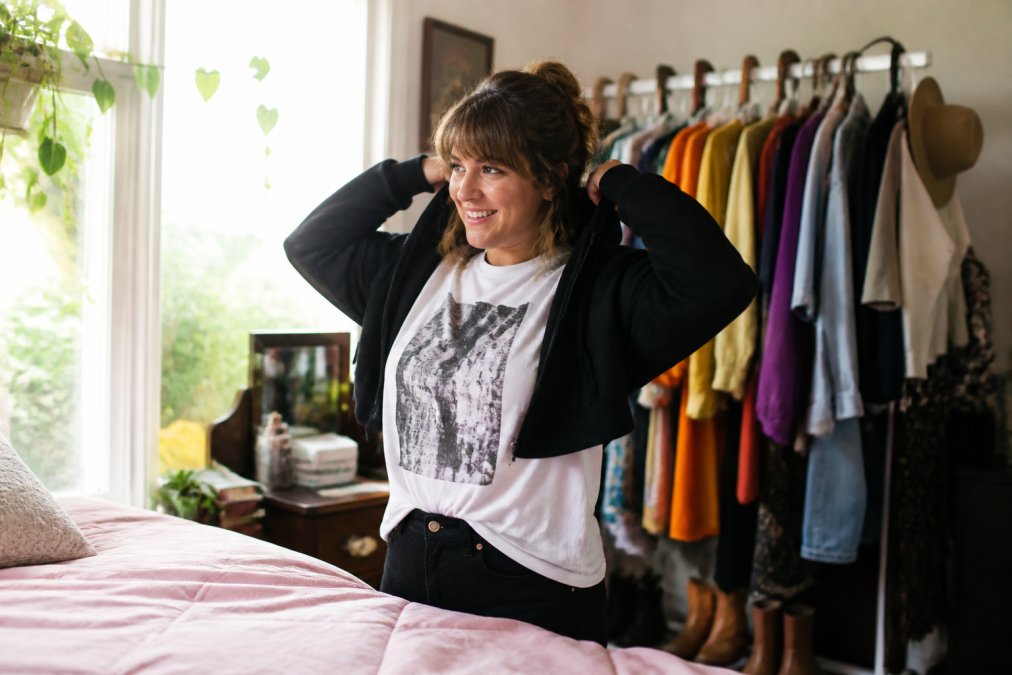
The Three-Layer Mood Formula
Most women abandon dopamine dressing because they buy one loud piece, wear it twice, and run out of ways to style it. The fix: build every outfit from three functional layers:
- The anchor layer. A neutral base that fits well and disappears into the background: a plain tee, a fitted tank, a simple slip. This is what keeps a bold piece from looking like a costume.
- The message layer. The one piece that carries the feeling, a graphic tee, a printed layer, a piece with a phrase you actually believe. One per outfit, not three.
- The texture layer. Something that adds dimension without adding noise: an open button-down, a cropped hoodie, a mesh or ribbed cardigan. Texture is what makes an outfit read as styled rather than assembled.
Reading Your Own Signals Before You Buy
Dopamine dressing fails when you buy for the version of yourself you wish you were. For two weeks, note which three garments you wear most and how you feel in them. Most women find the pattern isn't color, it's fit, fabric weight, and whether the piece lets them move. If your most-worn pieces are relaxed scoop necks in midweight cotton, a structured satin blouse is unlikely to become a favorite no matter how good it looks on the hanger.
Outfit Formulas You Can Repeat
The goal isn't a new outfit every day. It's a small set of formulas you can rotate without thinking:
- Graphic tee + blazer + straight-leg trousers. The message layer sits under structure, which reads intentional in almost any setting.
- Cropped layer + high-waisted wide-leg pants. The crop balances the volume below and keeps proportions clean.
- Slip dress + graphic tee layered underneath. Adds a message without sacrificing the drape of the dress.
- Racerback tank + open overshirt + joggers. The most casual formula, and the one most women default to on low-energy days.
Styling Statement Pieces for a Corporate Environment
Statement pieces work in a professional setting if you treat the message as the accent and the silhouette as the anchor. Pair one expressive garment with neutral, structured basics, a graphic tee under a blazer reads intentional, not casual. Three rules make this work:
- Cover the message when it matters. A blazer, cardigan, or overshirt that closes over the graphic turns a statement piece into a plain layer for meetings, then opens back up after hours.
- Match formality to the fabric, not the print. A heavyweight cotton tee reads more professional than a thin, sheer one, even with the same graphic.
- Keep the palette to three colors. A message piece plus two neutrals keeps the outfit from reading as loud even when the words are.
Caring for Unique Fabrics So Your Pieces Last for Years
Garment longevity comes down to how you wash and store, not how much you paid. A well-cared-for graphic tee outlasts a neglected designer piece. The rules are simple:
- Wash cold. Heat breaks down fibers and fades prints faster than anything else.
- Turn graphics inside out. This protects the print from friction against other garments.
- Skip the iron on prints. Heat and pressure crack the design. Follow each garment's care label.
- Air dry when you can. Tumble drying on low is fine for some blends, but air drying extends life.
- Store folded, not hung, for knits. Hangers stretch shoulders over time.
Second-Hand and Circular Economy Sourcing for Alternative Style
Second-hand sourcing is the fastest way to build an alternative wardrobe without adding to fashion's waste problem. The circular economy keeps garments in use instead of in landfills and surfaces pieces no current brand is making. What most guides skip is how to search for a specific alternative aesthetic, and how to tell in under a minute whether a piece is worth buying.
Where to Look, and What Each Channel Is Good For
Different resale channels surface different pieces. Matching channel to aesthetic saves hours:
- Local thrift and charity shops. Best for vintage denim, leather, band tees, and 1990s and Y2K basics. Inventory is unpredictable, so go often rather than long.
- Consignment shops. Higher prices, better curation. Best for structured pieces, blazers, and quality outerwear that would cost far more new.
- Online resale marketplaces. Best for specific labels, sizes, and deadstock. Search by brand name plus the aesthetic keyword rather than browsing categories.
- Clothing swaps and buy-nothing groups. Free or near-free, and the fastest way to test a new silhouette before committing money to it.
- Estate sales. Underrated for accessories, jewelry, and one-of-a-kind layers that read as alternative without trying.
Searching by Aesthetic, Not by Category
The biggest upgrade to second-hand sourcing is changing how you search. Instead of "women's top," search the aesthetic directly:
- "distressed knit" or "grunge cardigan"
- "mesh layering top" or "sheer long sleeve"
- "band tee" or "vintage graphic tee"
- "cargo" or "utility" plus the garment type
- "deadstock" plus fabric or era
The 60-Second Quality Check
Before buying anything second-hand, run this check. It takes under a minute and prevents most regrets:
- Seams. Turn the garment inside out. Loose, fraying, or puckered seams mean it's near the end of its life.
- Underarms and collar. These wear first. Discoloration here rarely comes out.
- Stretch test. Gently pull the fabric. If it doesn't spring back, the elastane is spent.
- Print condition. For graphic pieces, check for cracking, fading, or a rubbery feel, all signs the print is failing.
- Smell. Musty or chemical odors often mean mildew or dry-cleaning residue that won't wash out.
Pricing Sanity Checks
Second-hand pricing has drifted upward, so know rough thresholds before you check out:
- Thrift basics (tees, tanks, simple knits): typically a few dollars. Above roughly $15, you're paying for curation, not the garment.
- Vintage denim and leather: worth more, but compare against new made-to-order pricing before committing.
- Designer or deadstock pieces: verify the label and construction, since counterfeits are common in resale.
- Anything with visible damage: price it as a repair project, not a finished piece.
Pairing Second-Hand With Made-to-Order
The strongest alternative wardrobes mix both. Second-hand gives you history, texture, and one-of-a-kind layers; made-to-order gives you a message piece built to your size and produced only when you order it. A vintage overshirt over a new message tee gives you a look no one else has and keeps older garments in circulation.
Frequently Asked Questions
What is the 3-3-3 rule for clothes?
The 3-3-3 rule is a wardrobe-curation shortcut: three tops, three bottoms, and three pairs of shoes that all work together, giving you nine outfit combinations from nine pieces. It works best with pieces you actually love wearing, like a graphic tee or a racerback tank you reach for weekly. The point is fewer, better items that reflect your style identity instead of a closet full of fast fashion you never wear.
What are some ethical alternative clothing brands?
Look for brands that publish how and where garments are made, use made-to-order or print-on-demand production to avoid deadstock waste, and price transparently. F'cks Given Full Heart Co. is one example: every piece is made to order, from a $22 Unapologetic Is Flowy Cropped Tee to a $66 Unapologetically Me Cropped Sweatshirt, so nothing is mass-produced or landfilled. Vet any brand by checking whether its sustainability claims come with specifics, not just slogans.
What are the benefits of choosing sustainably made-to-order apparel?
Made-to-order production means a garment is created after you buy it, so there is no unsold inventory headed for a landfill. For you, the benefits are practical: pieces arrive in the size and color you chose, and the slower production cycle supports garment longevity because brands are not racing to clear seasonal stock. It also tends to mean smaller runs of deadstock fabrics and less pressure to follow fast-fashion trend cycles that churn consumer habits every few weeks.
How does intentional fashion differ from fast fashion trends?
Fast fashion pushes volume: new drops weekly, low prices, and a short wear life. Intentional fashion starts with a question instead: does this piece match my style identity and will I still wear it in two years? That might mean buying one $65 Energy Is Currency Cropped Hoodie instead of five $15 tops. The trade-off is real, because made-to-order items take longer to ship, but you end up with a capsule wardrobe built on self-expression rather than impulse.
What should I look for when shopping for alternative, soulful clothing?
Start with textile quality and production method. Check the fabric weight and blend on the listing, confirm whether the item is made to order, and read the care instructions before buying, since unique fabrics often need cold washing and air drying. Then check fit details like size guides with measurements, and whether the brand offers returns on made-to-order pieces. Finally, ask whether the message on the garment is one you would wear on an ordinary Tuesday, not just at a festival.
The challenge isn't finding expressive apparel. It's finding pieces that carry meaning and hold up past the first wash. F'cks Given Full Heart Co. builds every item made to order, consciously designed with intention, and rooted in a heart-first philosophy that refuses fast fashion and mass production. If you want a wardrobe that reflects your growth instead of a trend cycle, start with pieces made for you. SHOP NOW →

