


Table of Contents
- What Makes a Gift an Intentional Living Gift
- Meaningful Gifts for Personal Growth
- Journals for Self-Reflection: A Gift That Gets Used
- Clutter-Free Gift Ideas for People Who Have Enough Stuff
- Intentional Living Gifts by Budget
- Low-Waste and Ethically Made Gifts: What to Check
- You Don't Have to Reinvent Yourself to Begin Again
- Frequently Asked Questions
Last Updated: October 9, 2026
What Makes a Gift an Intentional Living Gift
An intentional living gift fits the recipient's real life, values, and needs rather than the occasion's pressure to impress, fewer things, chosen better, with a reason behind each one.
At F'cks Given Full Heart Co., everything is made to order and designed with intention, so intentional living gifts means presents a person actually keeps using.
An intentional gift matches the recipient, lasts, and does not create a burden. A gift that needs storage, upkeep, or a polite thank-you text is not really a gift.
Three Questions to Ask Before You Buy Anything
Run every idea through this filter:
- Would they buy this for themselves? If the answer is no, you are shopping for your taste, not theirs.
- Where will it live in six months? If you cannot picture it in use, it becomes clutter.
- Does it match how they actually spend their time? A runner and a reader need very different presents.
Meaningful Gifts for Personal Growth
Meaningful gifts for personal growth work best when they support a habit the recipient already wants to build, encouragement, not homework.
A goal-setting workbook handed to someone who never asked for one reads as a hint; the same book given to a friend who has talked about journaling for a year reads as attention.
The most common mistake is shopping for the person you wish they were, or the person they were five years ago. Both produce gifts that sit in a drawer.
Match the Gift to the Recipient, Not the Category
Personal growth looks different depending on the recipient:
- The partner who is always "on." They do not need another productivity system; they need permission to stop. A journal with a kind cover, or a standing weekly walk with no logistics talk, lands better than a planner.
- The parent with no uninterrupted minutes. Growth for them is a reclaimed hour. Childcare, a weeknight meal, or a journal small enough for five-minute windows fits their actual life.
- The friend in transition. Job change, move, breakup, new baby. They are not looking for self-improvement content but a reminder they are still themselves. Apparel with a message they would wear in public works; a workbook does not.
Match the Gift to the Occasion
Occasion changes what lands: birthdays can be personal and specific, holidays often need to work for multiple recipients or fit a budget, and just-because gifts should be small and low-pressure.
- Birthdays: Go specific. This is the one occasion where a personalized or made-to-order item is worth the lead time.
- Holidays: Go practical. People are already overwhelmed; a gift they will use weekly beats a gift they will display once.
- New year: Go gentle. Resolution-adjacent gifts can feel like pressure. A journal with a kind cover works; a habit tracker does not.
A Quick Filter Before You Buy
Run any personal growth gift through these questions:
- Does this support something they already want to do, or something I want them to do?
- Would they use this in the next thirty days, or is it aspirational?
- If they never used it, would they feel guilty? If yes, pick something else.
The best pick depends on how the person copes with a hard week: writers get journals, movers get experiences, talkers get your time, people in transition get reminders, and exhausted people get rest.
Journals for Self-Reflection: A Gift That Gets Used
A journal is the most reliable personal growth gift there is, because it asks nothing except a few minutes. The trick is matching it to the person's relationship with writing.
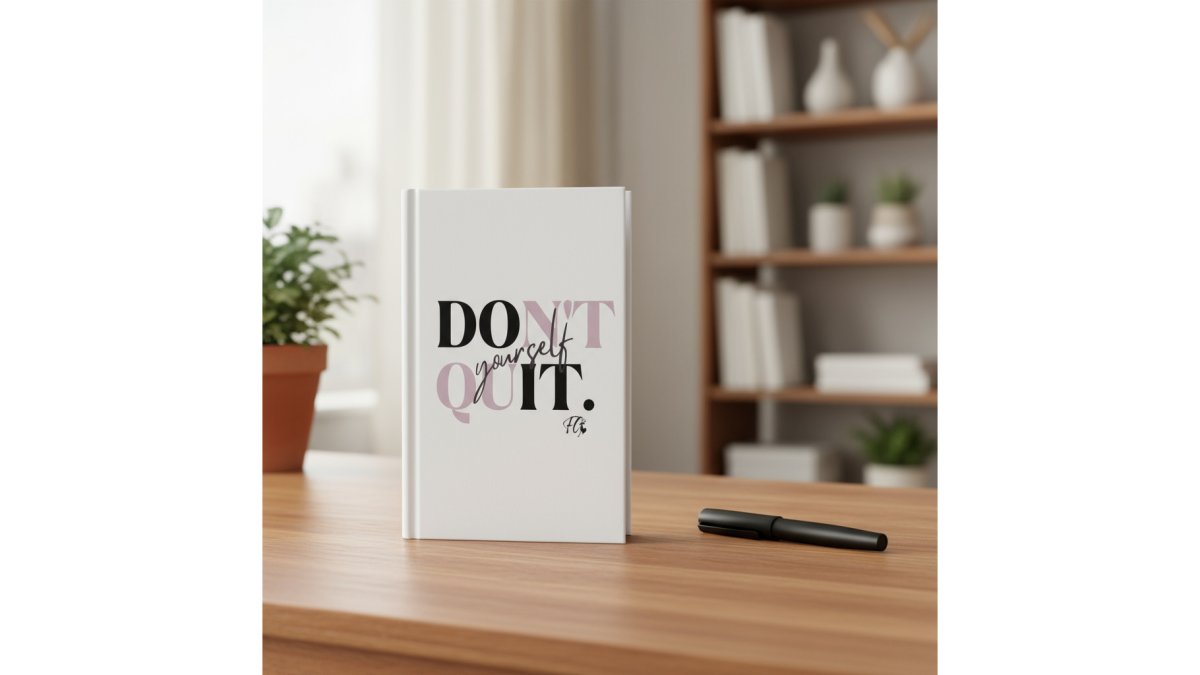
For someone who wants structure, the Don't Quit Yourself Hardcover Journal ($19.50) offers 150 lined cream pages, a matte laminated hardcover, a flexible sewn spine that lies flat, and perforated pages.

Clutter-Free Gift Ideas for People Who Have Enough Stuff
Clutter-free gift ideas solve a specific problem: the recipient is not short on objects, they are short on space.
Most gift guides recommend candles, mugs, and decorative objects to people whose homes are already full. The better move is something consumable, useful, or that replaces an item the person already uses daily.
The replacement angle is underrated: a worn-out hoodie gets retired when a better one arrives. The Light of Being Fleece Hoodie ($65.00) is a cotton-polyester fleece with a garment-washed finish, V-cut neckline, raglan sleeves, and relaxed fit, so it slots into a rotation instead of competing for closet space.

For someone whose wardrobe is genuinely complete, a tee worn weekly beats an object displayed once.
Non-Material Gifts That Cost Nothing
Some of the best intentional living gifts cost nothing at all, and they are usually the ones people remember.
- A standing monthly walk with no agenda
- Taking over a chore they dread for a month
- A handwritten letter about a specific memory you share
These are not consolation prizes for a tight budget; they are often harder to give, because they cost time instead of money.
Don’t Quit Yourself Hardcover Journal →
Intentional Living Gifts by Budget
Budget is the first thing most of us think about, yet most gift guides ignore it. Here is how the options above sort out.
| Budget | Gift Idea | Why It Works |
|---|---|---|
| Under $20 | Channel Here Faux Leather Journal ($18.00) | Closes securely, fits in a bag, gets used daily |
| Under $20 | Don't Quit Yourself Hardcover Journal ($19.50) | 150 pages, perforated, lies flat |
| Under $20 | Love Love Love Faux Leather Journal ($19.50) | Same build, message does the talking |
| Under $30 | I Am Enough Racerback Tank ($24.00) | Lightweight cotton, worn weekly |
| Under $30 | Breathe In and Let It Out Slouchy Tee ($26.25) | Relaxed fit, easy to style |
| Under $45 | Present. Powerful. Ready. Crossbody Bag ($41.00) | Replaces a worn bag, hands stay free |
| Under $70 | Light of Being Fleece Hoodie ($65.00) | Replaces a daily layer, no closet crowding |
A useful rule: spend more on the thing they touch every day, less on the thing they touch once.

Low-Waste and Ethically Made Gifts: What to Check
Low-waste gifting starts with one question: will this object still be in use in two years? If not, it is waste with a bow on it.
Most gift guides treat sustainability as a label to look for. It is more useful to treat it as a set of questions you can answer before you buy.
Materials: What to Look For and What to Avoid
Material specifics on a listing are a good sign. Vague language is not.
- Look for: named fibers (cotton, linen, wool, recycled polyester), specific finishes (garment-washed, matte laminated), and hardware described by type (metal zipper, elastic closure).
- Be cautious with: "eco-friendly blend," "premium materials," and "sustainable fabric" with no further detail. These phrases are not regulated and can mean almost anything.
- Avoid when possible: single-use plastics, novelty items with batteries that cannot be replaced, and anything with a strong synthetic fragrance, which can trigger reactions in people with sensitivities or allergies.
Packaging: The Part Most Guides Skip
A gift can be well-made and still arrive wrapped in waste. If packaging matters, check:
- Whether the item ships in plastic or paper.
- Whether the box is recyclable or has a plastic window.
- Whether there is an option to ship without a gift box.
If the brand does not say, that is information too, a short email asking how an item ships often gets a straight answer.
Durability: The Real Sustainability Metric
The most sustainable gift is the one that does not get replaced next year. Durability shows up in specific details:
- Seams and stitching. Reinforced seams on bags and apparel last longer than single-stitch construction.
- Hardware. Metal zippers and closures outlast plastic ones.
- Repairability. Can a button be replaced? Can a strap be swapped? Items designed to be repaired stay in use longer.
- Washability. A garment that survives regular washing beats one that requires dry cleaning and gets worn twice.
Avoiding Unwanted or Burdensome Gifts
A gift that creates a chore is not low-waste, even if it is well-made. Before you buy:
- Does the recipient have space for this? A small apartment changes what works.
- Does it require maintenance? Plants, pets, and anything that needs ongoing care can become a burden.
- Does it fit their living situation? Mobility needs, sensory preferences, and allergies all matter. A scented candle is a bad gift for someone with fragrance sensitivity. A heavy object is a bad gift for someone who moves often.
- Can you ask first? For larger gifts, a simple "I saw this and thought of you, would you actually use it?" removes the guesswork.
Verifying Ethical Claims
Ethical shopping claims are harder to verify than they look. What you can check is more concrete:
- How it is made. Made-to-order production avoids the overstock that ends up in landfill.
- Whether the claim is specific. "Consciously designed" means little on its own. "Made to order, ships from the printer" tells you something real.
- Return and sizing clarity. A brand confident in its product publishes a size guide.
We will be straight about our own position: we make everything to order, which means less dead stock and no mass production runs, and a production and shipping window before your item arrives.
If you are weighing a purchase against a fast-fashion alternative, the Federal Trade Commission's Green Guides set the standard for how environmental claims can legally be made in marketing, which is a useful reference when a label feels vague.
You Don't Have to Reinvent Yourself to Begin Again
The pressure around intentional living can make it feel like a personality overhaul. It is not.
Most people do not need a new identity. They need a reminder they can see, a page they can write on, or a layer they can put on before a hard day.
Finding a gift that respects someone's time, space, and values takes more thought than grabbing whatever is on sale.
Frequently Asked Questions
What is an intentional gift?
An intentional gift is chosen around the recipient rather than the occasion. You start with what they actually use, value, or need, then pick something that fits, instead of grabbing a generic item on the way to the party. Intentional living gifts usually share a few traits: they match the person's tastes and lifestyle, they get used rather than stored, and they avoid adding clutter. A journal for someone who processes by writing counts. A scented candle for someone who has eight unlit ones does not.
How do I give a gift without adding clutter?
Stick to consumables, experiences, or one item the person has genuinely wanted. Clutter-free gift ideas include a shared meal, a class you take together, a donation to a cause they care about, or a single well-made piece they will use weekly. If you go with an object, ask whether it replaces something they already own or solves a small daily problem. A crossbody bag that keeps essentials close, for example, earns its space. Anything that needs a new shelf does not.
What are good gifts for someone who values intentional living?
Look for items that support how they already spend their time. Journals for self-reflection fit someone who writes or meditates. Ethically made apparel suits a person who reads labels and avoids fast fashion. Experiences, quality time, and gifts of time work for anyone who prefers memories over merchandise. The test is simple: would they have bought this for themselves and felt good about it? If yes, you are close.
What are thoughtful gifts that encourage personal growth?
Meaningful gifts for personal growth tend to be tools, not trophies. A lined journal with space to write, a book tied to something they are working through, or a piece of clothing with a message they would repeat to themselves all work. The Don't Quit Yourself Hardcover Journal, for instance, is built around the idea of starting again rather than starting over. Pair any of these with a note explaining why you chose it, and the gift carries more weight than the object alone.

