


Table of Contents
- Why Your Clothing Choices Carry More Weight Than You Think
- How to Identify Ethical Fashion Brands Without Getting Fooled
- Fast Fashion vs Ethical Fashion: What the Price Tag Doesn't Tell You
- The Environmental Impact of Your Wardrobe (And Why It Matters)
- Fair Labor and Worker Welfare: The Human Side of Ethical Clothing Brands
- Your Ethical Capsule Wardrobe Guide: Building a Closet That Lasts
- The Psychological Shift: How Mindful Consumption Changes How You Feel
- Conclusion
- Frequently Asked Questions
Last Updated: September 16, 2026
Why Your Clothing Choices Carry More Weight Than You Think
Every year, the average person sends a startling amount of textile waste to landfills, most of it still wearable. That fact has pushed ethical clothing brands from niche concern to mainstream decision. This guide from F'cks Given Full Heart Co. breaks down what your wardrobe costs the planet, the people who make it, and your sense of self.
The core argument is simple: your closet is a vote. Where you spend, you endorse a supply chain, a labor standard, and an environmental footprint. Understanding ethical clothing brands means understanding what happens before a garment reaches your hands and after you stop wearing it.
How to Identify Ethical Fashion Brands Without Getting Fooled
Learning how to identify ethical fashion brands comes down to evidence, not adjectives. Any brand can print "conscious" on a hangtag. Fewer can show you where the cotton came from and who sewed the seam.
- The brand names its factories or production partners publicly
- Materials are specified (organic cotton, recycled polyester, hemp) rather than left vague
- The brand explains why prices are what they are
- Claims about labor or environment link to a real certification or audit
- Made-to-order or small-batch production is stated clearly, not implied
Fast Fashion vs Ethical Fashion: What the Price Tag Doesn't Tell You
The fast fashion vs ethical fashion comparison usually starts and ends with price, exactly the wrong place to start. A cheaper tag often just moves the cost somewhere you can't see: underpaid labor, synthetic fibers that shed microplastics with every wash, and garments designed to fall apart after a season.
| Factor | Fast Fashion | Ethical Fashion |
|---|---|---|
| Production model | Mass production, high volume | Made to order or small batch |
| Materials | Often synthetic blends | Organic, recycled, or durable fibers |
| Lifespan | Often a single season | Years of regular wear |
| Cost-per-wear | Low upfront, high over time | Higher upfront, lower over time |
| Labor visibility | Rarely disclosed | Named factories and audits |
The Environmental Impact of Your Wardrobe (And Why It Matters)
The environmental impact of the clothing industry is not a side issue, and the numbers behind it are more concrete than most shoppers realize. Conventional cotton is one of the thirstiest crops grown, the Water footprint of cotton network estimates it takes roughly 2,700 liters of water to produce a single conventional cotton t-shirt, which is about what an average person drinks over two and a half years.
What Happens After You Stop Wearing It
Most sustainability conversations stop at the point of purchase. The harder question, and the one almost no competitor answers, is what to do with a garment at the end of its life. End-of-life garment management is the missing half of the loop.
- Repair first. A lost button, split seam, or small hole is a ten-minute fix, not a reason to replace. Basic hand-sewing skills and a needle-and-thread kit extend a garment's life by years.
- Alter or upcycle. A long-sleeve tee with worn cuffs becomes a short-sleeve tee. A stained shirt becomes a cleaning rag or a quilt square. Upcycling keeps the fiber in use without new production.
- Resell or donate. Consignment platforms and thrift stores give garments a second owner. Donate only clean, genuinely wearable items, donation centers are not landfills, and unusable textiles burden them.
- Recycle textiles. Municipal textile recycling and retailer take-back programs accept worn-out fabric and turn it into insulation, wiping cloths, or new fiber. Availability varies by location, so check locally.
- Compost natural fibers. Untreated cotton, hemp, and linen can break down in industrial composting, though most home compost piles are too cool to process them quickly. Synthetic blends should never go in compost.
Fair Labor and Worker Welfare: The Human Side of Ethical Clothing Brands
Fair labor is where ethical fashion stops being an environmental story and becomes a human one. The people who cut, sew, and finish garments are frequently the least visible part of the supply chain, and the most affected by pressure to keep prices low.
Your Ethical Capsule Wardrobe Guide: Building a Closet That Lasts
An ethical capsule wardrobe guide starts with a simple goal: a small set of pieces you actually wear, made well enough to last. A capsule wardrobe is a curated collection of versatile garments that mix and match, so you own fewer items and wear each one more often.
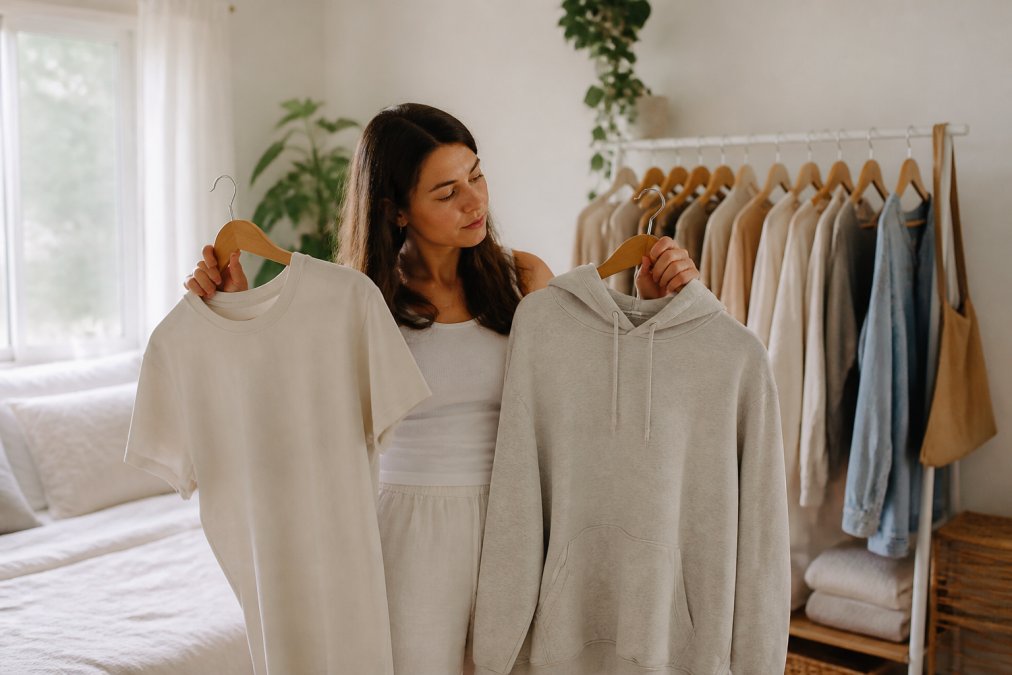
Building one follows a clear sequence:
- Audit what you own. Pull everything out and note what you actually wore in the past year.
- Identify the gaps. Find the pieces you reach for constantly and replace only those.
- Choose durable materials. Prioritize organic cotton, hemp, and quality blends over fast-fashion synthetics.
- Buy made to order when you can. It reduces overproduction and deadstock waste.
- Maintain what you buy. Wash cold, dry low, and repair before replacing.
The Psychological Shift: How Mindful Consumption Changes How You Feel
Most coverage of ethical fashion stops at the environment and labor. That argument alone rarely changes behavior because it speaks to values, not the daily experience of getting dressed. The psychological case for ethical clothing is the one competitors skip, and often the one that makes the habit stick.
Decision Fatigue and the Case for Fewer Choices
Every morning, the average person makes dozens of small decisions before leaving the house. A closet packed with options that don't quite work, wrong fit, wrong color, impulse buys, adds friction to a decision that should take seconds. A smaller, intentional wardrobe removes it: when every piece fits, matches, and was chosen on purpose, getting dressed becomes near-automatic rather than a negotiation.
Quieting the Guilt of Impulse Buys
A common pattern among people who shift toward ethical clothing is a drop in low-grade guilt. That guilt isn't moral posturing, it's the discomfort of knowing a purchase conflicts with your values. Fast fashion is engineered to produce it: the low price, the urgency of a sale, the trend cycle that makes last season's item feel obsolete. Impulse buying feels good for a moment and hollow afterward.
Identity and Self-Expression
A second psychological benefit gets less attention: alignment. When your clothes reflect values you actually hold, care for workers, the planet, quality, getting dressed becomes a small daily confirmation of who you are rather than a compromise, unlike wearing a garment made under conditions you wouldn't accept for yourself.
A Simple Practice to Start
If the psychological shift sounds abstract, there is a concrete way to test it. Before any clothing purchase, ask three questions:
- Will I wear this at least thirty times? If the honest answer is no, the cost-per-wear math does not work, and the purchase is likely to become clutter.
- Does it fit the life I actually live? A formal piece for a life of casual days is a costume, not a wardrobe staple.
- Would I still want it if it were not on sale? Sales create artificial urgency. If the answer is no, the discount is doing the deciding.
Conclusion
The hardest part of ethical fashion isn't finding better brands. It's slowing down enough to ask where a garment came from before you buy it. That question, asked consistently, is what shifts a wardrobe from clutter to intention.
Frequently Asked Questions
What does it actually mean for clothing to be ethical?
Ethical clothing means the garment was made without exploiting people or the planet. That covers fair wages and safe conditions for workers, supply chain transparency so you know where materials come from, and reduced environmental harm through lower chemical runoff, less textile waste, and responsible water use. A brand can be ethical without being fully sustainable, and vice versa, so check both sides before you buy.
How can I tell if a brand is truly ethical or just greenwashing?
Look for specifics, not slogans. Ethical clothing brands publish named factories, material certifications, or third-party audits. Vague claims like 'eco-friendly' or 'conscious' without details are a red flag. Check whether the brand explains its supply chain, how it handles post-consumer waste, and whether it uses organic textiles or recycled fibers. If a brand can't answer where its fabric comes from, treat the sustainability claim with caution.
What is the difference between fast fashion vs ethical fashion in practical terms?
Fast fashion pushes trend-driven pieces at low prices by compressing production timelines, which often means synthetic fibers, chemical runoff, and garment workers paid per piece rather than per hour. Ethical fashion slows that down. It costs more upfront because fair labor and better materials cost more, but the cost-per-wear drops when a garment lasts years instead of months. One replaces a $15 tee four times a year; the other you wear for five years.
How do I start an ethical capsule wardrobe without spending a fortune?
Start with what you already own. An ethical capsule wardrobe guide usually begins with a closet audit: pull everything out, note what you actually wear, and identify gaps. Replace worn-out basics one at a time with pieces from ethical clothing brands rather than buying a whole new wardrobe at once. Choose versatile items like a racerback tank, a relaxed tee, or a fleece hoodie that work across seasons. Cost-per-wear improves as you add fewer, better pieces.

